
Brothers Built $100M-a-Year Business After Tragic Dog Loss: Halo


Key Takeaways
- Ken Ehrman turned to industry connections to help launch the wireless, GPS-connected Halo Collar.
- After several years of aggressive fundraising, the company’s focus shifted to profitability.
- Now, Halo Collar is seeing rapid growth, heading for $140 million in annual revenue this year.
In 2018, Ken Ehrman’s niece’s dog, Ruby, escaped her invisible fence and was fatally struck by a car. “It was a real tragedy,” Ehrman tells Entrepreneur. “My niece was 11, and it was her first experience with death. She was hysterical. We all were. They had just rescued Ruby a year earlier.”
That’s when a “light bulb went off,” Ehrman says. The problem with invisible and traditional fences is that once a dog is out, they’re out, because it’s only one line of defense. Additionally, with a quick Google search, Ehrman learned that about 10 million pets go missing every year.
Ehrman started to think about applying GPS to the issue. “You can’t get out of GPS,” he explains. “There’s no line you can cross. You can continue to have the dog be alerted to the fact that they’re where they’re not supposed to be until they stop or turn around.”
Drawing on an IoT background to start a business
Ehrman’s more than two decades in the Internet of Things industry up to that point put him in a uniquely strong position to use GPS to improve pet safety.
The entrepreneur graduated from Stanford University with a B.S. in industrial engineering and founded I.D. Systems, Inc., which introduced the use of radio frequency identification technology for wireless vehicle tracking and fleet management in 1993. The company went public on NASDAQ in 1999 and remains a global provider of wireless solutions for maintaining high-value assets today.
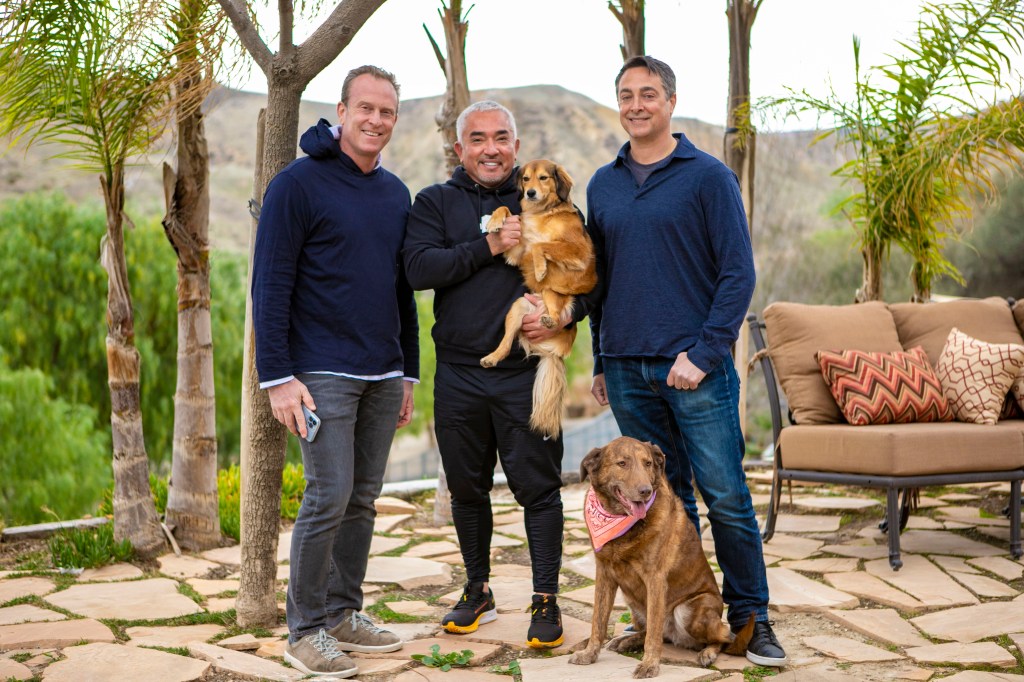
Ehrman’s brother Michael Ehrman, also a Stanford graduate who had worked with Ehrman on I.D. Systems, Inc., was fully on board with the idea of a GPS-connected safety solution. The duo co-founded the Plano, Texas-based business Halo Collar in 2018.
Streamline design and manufacturing, but stay hands-on
“Anyone can have an idea,” Ehrman says. “For any entrepreneur, the biggest challenge is: How do you make it something real and tangible that people can use?”
Fortunately, Ehrman’s decades’ worth of experience in the industry meant he had a lot of helpful connections. Ehrman turned to intelligent asset tracking manufacturer Quanta, based in Taiwan.
“So basically they do all of the hardware engineering,” Ehrman says. “Getting the manufacturer to also do the design, for an entrepreneur, is the holy grail in many ways. Because then there’s no finger-pointing. As long as they can design something that they can build.”
Despite the streamlined design and manufacturing process, Ehrman notes it’s still essential for founders to be hands-on to achieve the desired results. The Ehrman brothers visit Taiwan several times a year and have virtual meetings three or four times a week to make sure everything’s progressing as it should.
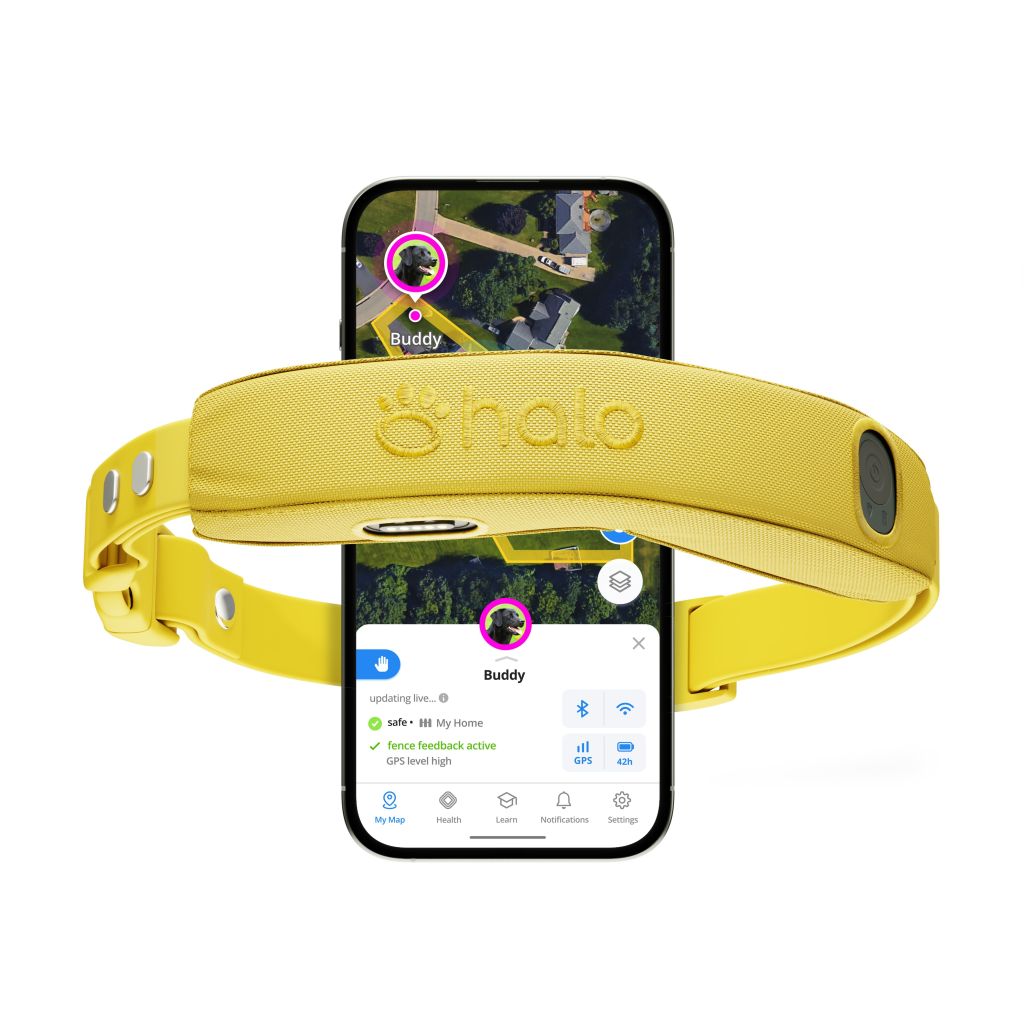
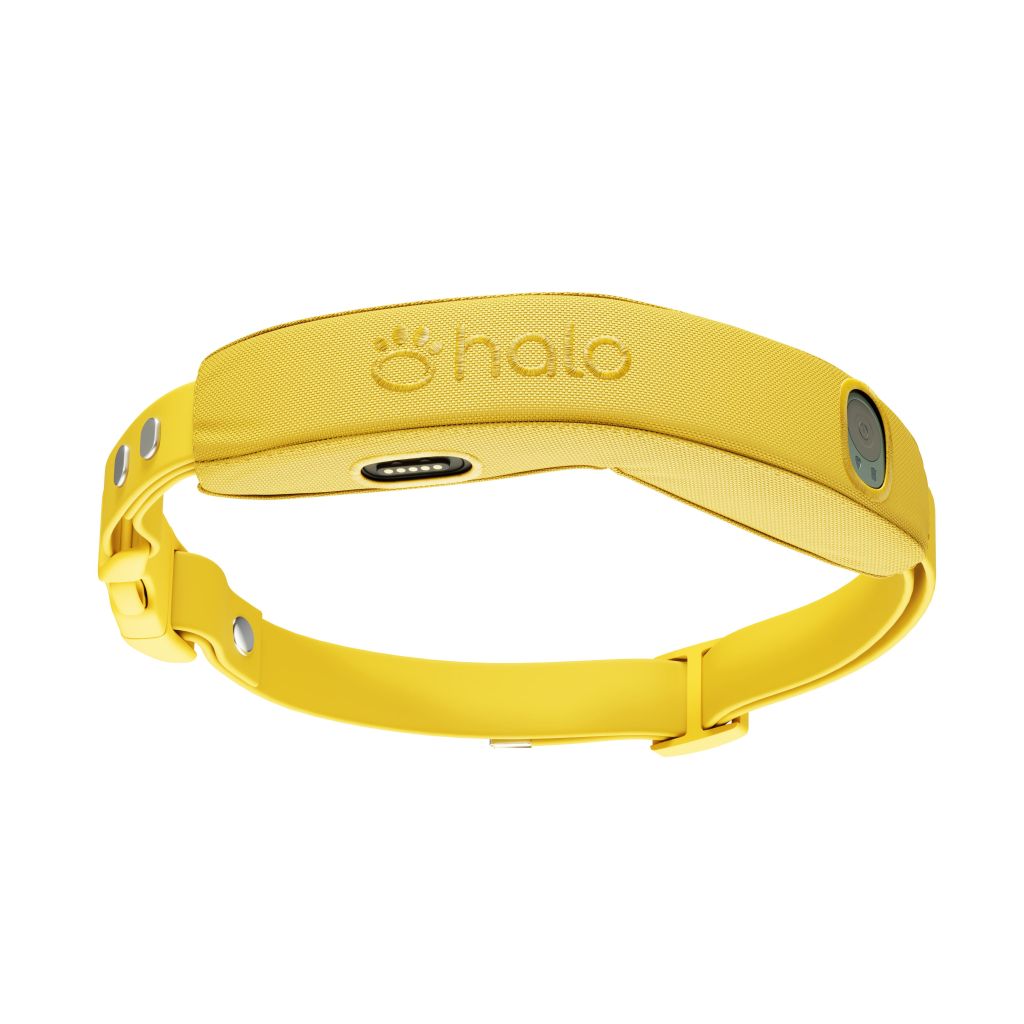
The newest Halo Collar product, the fifth generation featuring the most durable design yet, is performing at its peak. Company data reveals that this past June alone, a dog heard the product beep and turned around 12 million times.

On the app development side, the Ehrmans have enlisted a team based in Eastern Europe.
“So basically, instead of bringing that all in-house, we outsourced it, which for a startup now growing into a company that this year should be doing about $150 million in sales, has really been very affordable and scalable,” Ehrman says.
Halo Collar has expanded from being available on AT&T networks only to any network worldwide. The collars are also connected to Wifi to maintain 100% connectivity at all times, Ehrman adds.
Shifting the focus from fundraising to profitability
In the beginning, Ehrman had a clear and ambitious vision for Halo Collar’s fundraising journey.
“ March 2018 was the first raise, and then every year I was going to raise as much money as we needed to hopefully get to the next year,” Ehrman says, “and hopefully by that point we had made enough progress that it would be at ever higher valuations. So that was the grand plan.”
And initially, raising funds for Halo Collar went according to that plan. People immediately understood the concept and its potential to save pets. Then, by November 2021, the money began to dry up. Would-be investors wanted to know the annual sales numbers; they said they needed the business to be profitable.
We’ve probably invested close to $100 million in the R&D.
The problem, Ehrman explains, is that developing the next generation invisible fence — “maybe the equivalent of the iPhone for dogs” — is extremely expensive.
“ You have to invest,” Ehrman says. “We’ve probably invested close to $100 million in the R&D at this point. So you have to be able to raise money, and I don’t consider it losing money. I consider it investing in the opportunity.”
Halo Collar had achieved a $400 million valuation by the end of 2021, but the company had to completely shift its strategy to focus on profitability.
”Almost my entire career before Halo, we were never profitable,” Ehrman says. “We were always investing for the future. With many tech companies, that’s what you have to do. But by getting forced to [prioritize profitability], it really was a transformation for the company financially.”
Quadrupling sales, heading for a $140 million milestone
Today, Halo Collar is profitable and has quadrupled its sales in under three years.
The business generated nearly $100 million in revenue in 2025, and that figure is projected to hit $140 million this year. What’s more, to date, Halo has protected more than 500,000 dogs who might otherwise be vulnerable to traffic, wildlife or getting lost.
One of the key strategies that unlocked Halo Collar’s profitability and impressive growth? Working with the company’s manufacturer to hold inventory, Ehrman says.
Essentially, the customer orders online, Halo Collar gets paid, the manufacturer ships the order directly from Taiwan to the consumer, then receives payment 30 days later. “So we actually had negative inventory conceptually,” the founder notes.
The strategy meant that Halo Collar didn’t have to sell equity to buy inventory — a pitfall that one of Ehrman’s mentors had cautioned against.
Partnering with renowned dog behaviorist and trainer Cesar Millan was another boon for business, allowing the use of voice commands for correction instead of any sort of electric shock, Ehrman says.
Expanding from DTC to physical retail: consumer awareness
Halo Collar’s most significant challenge right now is consumer awareness. “ Because 10 million dogs are lost, yet we’ve only sold 600,000 or so collars since inception, that leaves many dogs unprotected,” Ehrman says.
With its start in the direct-to-consumer space, Halo Collar disrupted the invisible-fence market online because it appeared as an attractive option for dog owners actively searching for boundary solutions.
However, the next big opportunity lies in an aggressive physical retail push — the key to reaching consumers who might not even realize such a product exists.
“ If you lived in New York City, you would never search ‘invisible fence,’” Ehrman explains. “But you’re a perfect user of Halo because if you want to take your dog with you to the country on the weekends or into the park, wherever you go, you need Halo. But you wouldn’t know it because you weren’t searching for it.”

Young entrepreneurs should validate assumptions for success
Looking forward, Ehrman is excited to continue Halo Collar’s product innovation with the goal of keeping more pets safe.
The founder is also embracing the opportunities that come with AI, noting how much data it brings to the table, helping the company see how dogs respond to its product, and even getting granular on how long it takes certain breeds to learn the technology.
Suffice it to say, technology has changed a lot about the business landscape since Ehrman’s early entrepreneurial days, in an era before cellphones and the internet.
But many of the business fundamentals required to grow a successful startup remain the same.
For any young entrepreneur who might want to start a business of their own, Ehrman says it’s important to keep in mind that most startups aren’t successful — but that outcome doesn’t happen overnight.
“When you do the upfront analysis of the business plan, make sure all your assumptions are accurate and be realistic along the way,” Ehrman says. “These things should not just creep up on you. Each step of the way, you have to validate everything, all of your assumptions. And then you will likely be successful, because if it made sense then, it’s going to make sense now.”
Key Takeaways
- Ken Ehrman turned to industry connections to help launch the wireless, GPS-connected Halo Collar.
- After several years of aggressive fundraising, the company’s focus shifted to profitability.
- Now, Halo Collar is seeing rapid growth, heading for $140 million in annual revenue this year.
In 2018, Ken Ehrman’s niece’s dog, Ruby, escaped her invisible fence and was fatally struck by a car. “It was a real tragedy,” Ehrman tells Entrepreneur. “My niece was 11, and it was her first experience with death. She was hysterical. We all were. They had just rescued Ruby a year earlier.”
That’s when a “light bulb went off,” Ehrman says. The problem with invisible and traditional fences is that once a dog is out, they’re out, because it’s only one line of defense. Additionally, with a quick Google search, Ehrman learned that about 10 million pets go missing every year.
Ehrman started to think about applying GPS to the issue. “You can’t get out of GPS,” he explains. “There’s no line you can cross. You can continue to have the dog be alerted to the fact that they’re where they’re not supposed to be until they stop or turn around.”

