
What are TLDs? How to Pick the Best One for Your Business
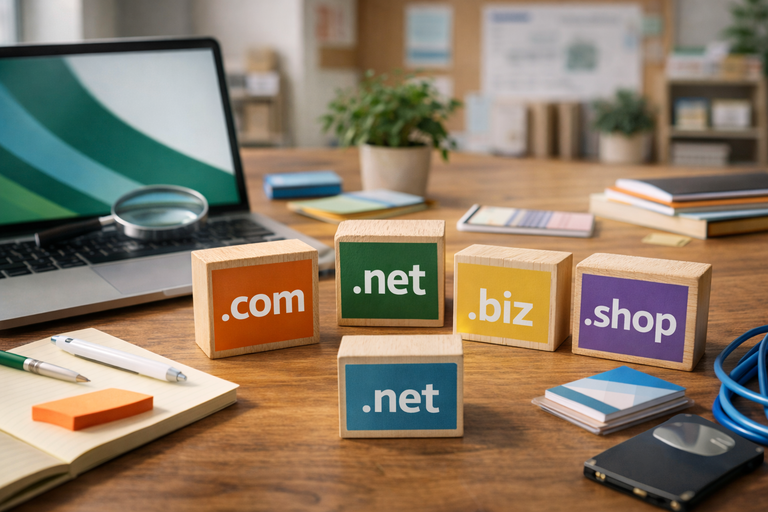

At the end of every website address, you’ll see a few letters after the last dot. These letters make up what’s known as a top-level domain, or TLD.

When you visit sites like google.com, amazon.net, or wikipedia.org, you might not pay much attention to the ending. But if you’re launching a business or building a brand online, your choice of TLD is important.
The TLD you choose becomes part of your brand’s identity. People see it even before your homepage appears. For example:
- .gov: Used by government agencies
- .edu: Used by educational institutions
- .shop: Indicates a store or retail site
These endings shape how potential customers perceive your site and can affect trust and click-through rates.
In the next sections, we’ll explain what TLDs are, how they work, and how to choose the best one for your business.
Understanding the Basics of TLDs
A TLD is the last part of a domain name. For example, in www.yourcompany.com, the .com is the TLD. These endings are managed by ICANN, an organization that ensures every domain name is unique and registered correctly online.
As of late 2024, 1,602 TLDs exist. This number includes the original legacy extensions, country-specific options, and hundreds of newer extensions introduced over the past decade. The domain registration market closed 2024 with 364.3 million registrations across all TLDs, representing a 1.2% year-over-year increase.
The TLD system breaks down into three primary categories:
- Generic Top-Level Domains include familiar extensions such as .com, .net, and .org. These were among the first TLDs created and remain the most widely recognized.
- Country Code Top-Level Domains are assigned to specific nations or territories. Examples include .uk for the United Kingdom, .de for Germany, .ca for Canada, and .jp for Japan.
- New Generic Top-Level Domains emerged from an ICANN expansion program that began in 2014. These include industry-specific options such as .tech, .store, and .app.
Each type has its own uses, benefits, and drawbacks.
The .COM Domain: Pros and Cons
The .com extension remains the dominant force in the domain industry. As of December 2024, 156.3 million .com domains were registered worldwide. Approximately 49.2% of all websites use this extension, and 88% of the 500 most valuable global brands have chosen it for their primary web presence.
Pros of .COM
Universal RecognitionMost users assume a company’s website uses a .com domain. Studies show .com domains are remembered 44% of the time, more than any other extension. Customers are more likely to find you because they expect a .com address.
Trust FactorIn 2024, .com scored 3.5 for perceived safety and reliability, the highest among all TLDs. Trust is critical for email delivery and website conversions.
Professional CredibilityA .com address signals that your business is established and credible. Many still view other extensions as less proven. Presenting a .com email on business materials suggests long-term stability.
Resale ValuePremium .com domains often retain or increase in value. Securing a strong .com domain early can yield significant future returns.
Cons of .COM
Availability ProblemsThe .com domain has existed since 1985, and most short, memorable domains are already taken. Finding an exact match for your brand is challenging, often requiring added words, hyphens, or less memorable alternatives.
Rising CostsWholesale .com prices rose 28% from 2021 to 2024, with further increases expected. While new registrations remain affordable, premium domains can cost thousands or even millions.
OvercrowdingWith over 156 million .com domains registered, competition is high. Typosquatting and domain parking can result in similar names being taken, potentially confusing customers.
The .NET Domain: Pros and Cons
Initially intended for network providers, .net now serves as a general alternative to .com. By late 2024, approximately 12.7 million .net domains were registered.
Pros of .NET
Legacy CredibilityAs one of the original TLDs, .net is more recognized and trusted than newer extensions, with a trust rating of 3.3.
Tech AssociationIt suits tech companies, software providers, and internet services. For technical businesses, this extension reinforces your industry image.
Better AvailabilityObtaining a .net domain is easier than getting a .com, increasing your chances of securing your preferred name without modifications.
Similar Pricing to .COMRegistration and renewal costs for .net are typically comparable to those for .com, making it a cost-effective classic TLD option.
Cons of .NET
Second-Choice PerceptionSome perceive .net as a fallback when .com is unavailable, which can influence how visitors view your brand.
Type-In Traffic LossWhen people search for your site, they often type your company name followed by .com. If someone else owns that .com, you could lose visitors to their site instead.
Limited Industry FitFor non-technical businesses, .net may appear out of place. For example, a bakery or consulting firm using .net could confuse customers compared to .com.
The .ORG Domain: Pros and Cons
The .org extension was created for organizations, especially nonprofits. By late 2024, there were approximately 17.3 million .org registrations with an 85.2% renewal rate.
Pros of .ORG
Mission-Driven SignalingUsing .org signals a purpose beyond profit. Nonprofits, charities, political campaigns, and community groups benefit from this association, which communicates dedication to a cause.
High Trust Rating.org scores 3.3 on trust scales, similar to .net and other legacy TLDs. It is generally viewed as a credible source, especially for educational or advocacy content.
Strong Renewal RatesAn 85.2% renewal rate indicates long-term commitment and satisfaction among .org registrants.
Better Availability Than .COMPreferred names are more likely to be available as .org than .com, especially for nonprofits and organizations with unique names.
Cons of .ORG
Not Suited for Commercial VenturesFor commercial ventures, the .org top-level domain can create confusion, as customers expect .org sites to be informational rather than transactional. Using .org for e-commerce may mislead visitors.
Donation and Volunteer ExpectationsVisitors often expect .org sites to offer volunteer opportunities or donation options. If your site lacks these, users may question your choice of extension.
Limited Branding FlexibilityUsing .org is ideal for nonprofits, but it can limit branding flexibility. If your organization expands into revenue-generating activities, a separate domain may be necessary to avoid confusion.
Country Code TLDs: Pros and Cons
Country code TLDs numbered 140.8 million registrations at the end of 2024, with 1.8% year-over-year growth. The top 10 ccTLDs by registration volume were .cn (China), .de (Germany), .uk (United Kingdom), .ru (Russia), .nl (Netherlands), .br (Brazil), .au (Australia), .fr (France), .in (India), and .eu (European Union).
Pros of ccTLDs
Local Search AdvantagesFor businesses targeting specific countries, ccTLDs can improve local search visibility. For example, a .co.uk domain typically performs better in UK search results than a generic .com.
Geographic TrustA country-specific TLD signals local presence and accountability, making customers more comfortable. For example, German consumers may prefer purchasing from a .de website.
Regulatory ComplianceSpecific industries require proof of local presence. A ccTLD can help meet regulatory or contractual requirements for national domains.
AvailabilityMany ccTLDs offer better availability than .com, making it easier to secure your exact brand name with a country-specific extension.
Cons of ccTLDs
Geographic LimitationsExpanding internationally with a ccTLD may limit your perceived reach. For example, a company using .de may appear too Germany-focused when entering the French market.
Registration RestrictionsSome ccTLDs require proof of local presence, citizenship, or business registration. Requirements vary by country and can complicate registration.
International User ConfusionInternational users may not recognize your ccTLD or may hesitate to visit. For example, a .ru domain can raise concerns among American or European users due to geopolitical associations.
Varying Trust LevelsTrust levels vary among ccTLDs. For example, .us scores only 3.3 on trust ratings, and some lesser-known ccTLDs score even lower.
The .IO Domain: Pros and Cons
The .io extension is technically the ccTLD for the British Indian Ocean Territory, but is widely used by tech startups and developers. It is short, memorable, and associated with input/output in computing.
Pros of .IO
Tech Industry StandardMany successful startups use .io domains, signaling innovation and technical expertise. Investors, developers, and tech-focused customers recognize and respect the .io association.
Excellent AvailabilityUsing .io offers better availability for short, memorable domain names than .com, often allowing you to secure your exact brand name without modifications.
Global AppealThe extension has largely lost its geographic association and is now recognized globally as a tech-focused top-level domain.
Trust Among Tech AudiencesIt scores 3.0 on general trust ratings, though trust is likely higher among technology-focused users familiar with successful .io companies.
Cons of .IO
Higher PricingRegistration and renewal costs for .io domains are typically higher than .com and other legacy TLDs. Expect to pay a premium for this extension.
Geopolitical ConcernsThe British Indian Ocean Territory has a complex political status. Some companies avoid TLDs with uncertain governance, though this is unlikely to directly affect most businesses.
Limited Recognition Outside TechIf your target audience is older or non-technical, .io may be confusing rather than conveying credibility.
Trust Rating for General AudiencesIts 3.0 trust score is lower than .com, .net, and .org. For businesses targeting mainstream consumers, this difference is significant.
The .AI Domain: Pros and Cons
The .ai domain is the ccTLD for Anguilla, a Caribbean island, and has grown rapidly with the artificial intelligence industry. Registrations quadrupled in three years, reaching over 598,000 by mid-2025.
Pros of .AI
Industry AlignmentIt offers strong branding alignment for companies in machine learning, large language models, or generative AI. Examples like Scale.ai and Character.ai reinforce this positioning.
Startup CredibilityIn Y Combinator’s Winter 2024 batch, 23% of companies chose .ai domains, rising to 28% by mid-2025 across Y Combinator and Techstars startups. The extension signals cutting-edge, venture-backable technology.
MemorabilityThe extension is short and memorable. Paired with a concise brand name, it creates a compact web address.
Growing Availability of Premium NamesMany desirable .ai domains remain available, while equivalent .com versions would cost significantly more.
Cons of .AI
Narrow PositioningIf your company is not in the artificial intelligence industry, using .ai may confuse visitors due to its strong association with that industry.
High Renewal CostsPremium .ai domains are expensive, with renewal costs often several times higher than standard .com domains.
Trust RatingNo specific trust rating data exists for .ai. As a ccTLD from a small Caribbean nation, it may face skepticism from users unfamiliar with its tech industry adoption.
Potential SaturationAs more AI companies adopt .ai, the extension may become crowded, reducing its uniqueness.
The .STORE Domain: Pros and Cons
The .store domain was created for retail and e-commerce businesses and ranks among the top 10 gTLDs by registration volume as of mid-2024.
Pros of .STORE
Commercial Intent ClarityIt clearly communicates a retail or e-commerce purpose, which can improve click-through rates from search results.
Brand ReinforcementA .store domain creates a dedicated shopping destination that complements your main brand domain, as seen with companies like Netflix using netflix.shop.
Good AvailabilityAs a newer extension, .store offers greater availability, allowing you to secure your brand name without compromise.
Affordable PricingRegistration and renewal costs for .store domains are generally competitive with, or lower than, those for .com.
Cons of .STORE
Low Renewal RatesNew gTLDs like .store have an average renewal rate of 35.7%, compared to 85.2% for legacy TLDs, indicating lower long-term retention.
Limited RecognitionDespite its growth, .store remains less familiar to average users than .com, which may cause hesitation before clicking.
Trust ConcernsNewer extensions lack the trust of legacy TLDs. Scam sites and low-quality operations sometimes use new gTLDs, which can affect perception.
Narrow ApplicationIt’s suitable for e-commerce but may not be appropriate for a company’s main website, blog, or support portal.
The .TECH Domain: Pros and Cons
Launched in 2015, .tech targets technology-related businesses and provides a clear industry signal.
Pros of .TECH
Industry SignalingIt immediately communicates a technology focus, attracting relevant audiences and filtering out unrelated visitors.
Modern AppearanceA .tech domain conveys modernity and forward thinking, which is essential for startups and innovative companies.
Better Availability Than .IOWhile .io is saturated with standard terms, .tech offers a better chance of securing your preferred domain name.
Reasonable PricingRegistration costs for .tech are typically lower than for .io and comparable to those for .com.
Cons of .TECH
Low Renewal RatesLike other new gTLDs, .tech has an average renewal rate of 35.7%. Many registrants abandon these domains after the first year.
Promotional Pricing TrapsMany registrars offer low first-year prices for .tech domains, followed by higher renewal fees. Review terms carefully before committing.
Limited Mainstream RecognitionOutside of technology-focused audiences, .tech may not resonate. A general consumer seeking a plumber will not expect to find one at a .tech address.
Competition with .IOAmong tech startups, .io remains more established and recognizable, making the choice between .io and .tech challenging.
How TLD Choice Affects Search Engine Optimization
Google treats all gTLDs equally in search rankings. A .store domain does not rank higher than a .com domain for shopping queries based solely on the extension. TLD keywords offer no ranking advantage.
However, TLD choice indirectly affects SEO through user behavior and perception.
Click-Through RatesUsers are more likely to click familiar TLDs in search results. For identical content, .com may receive more clicks than .xyz due to higher trust.
Backlink PotentialWebsites are more likely to link to trusted, established domains, which directly influences search rankings.
User Engagement MetricsIf visitors leave your site quickly due to trust concerns related to the TLD, these engagement signals can negatively affect search performance.
Local SEO BenefitsFor country-specific businesses, ccTLDs can improve local search visibility. For example, .de domains typically rank better in German search results for local queries.
While Google does not directly penalize or reward specific TLDs, user behavior influenced by TLD choice affects overall SEO outcomes.
Making Your Final Decision
Based on the data and analysis, use the following framework to select the right TLD for your needs:
For Global Commercial BusinessesIf available, secure a .com domain that matches your brand. Its 88% adoption rate among top global brands reflects its continued importance. Familiarity, trust, and memorability typically outweigh higher acquisition costs.
For Technology StartupsConsider .io, .tech, or .ai depending on your specific focus. If you are building AI products, .ai is a perfect fit, as 28% of recent Y Combinator and Techstars startups have chosen it. For general tech products, .io remains the established favorite with strong recognition among investors and developers.
For Local BusinessesUse a .com domain for credibility and a relevant ccTLD for local search performance. For example, a Canadian bakery might use yourcompany.com for branding and yourcompany.ca for local presence and search visibility.
For Nonprofits and Mission-Driven OrganizationsThe .org domain remains the best choice, with an 85.2% renewal rate indicating strong user satisfaction. The extension clearly communicates purpose over profit.
For E-commerce VenturesConsider .store or .shop as secondary domains to complement your main .com presence. Netflix’s use of netflix.shop demonstrates how major brands create dedicated shopping destinations.
Setting Up Your Domain and Hosting
After selecting your TLD, choose reliable hosting to launch your site. We offer integrated solutions that combine domain registration with hosting packages.
We offer free domain registration for the first year with most shared and WordPress hosting plans. Supported TLDs include .com, .ca, .net, .org, .info, and .biz. This bundled approach simplifies setup and reduces upfront costs.
We power over 600,000 websites and are committed to sustainability. Through our partnership with the Bonneville Environmental Foundation, we invest three times our energy consumption into renewable sources. All plans include free SSL certificates, nightly backups, and a free CDN.
Pricing starts at $2.95/month for Lite, $5.95/month for Pro, and $11.95/month for Premium. All plans include WHOIS privacy protection at no extra cost to keep your contact details private.
If your domain is registered elsewhere, you can point it to our nameservers without transferring ownership. This allows you to keep your current registrar while benefiting from our hosting platform.
Next Steps for Your Website
Your TLD shapes your online presence, but content, products, and the value you provide are even more critical.
Choose a TLD that fits your industry, audience, and budget. Register your domain with a trusted provider, set up reliable hosting, and focus on building a website people want to visit, regardless of your web address.
With 364.3 million domains registered worldwide, businesses are continually establishing their online presence. Your TLD is simply the address that helps customers find you. Make it memorable and appropriate for your industry, then focus on the other elements that drive business success.

